
What you can do
Blackheads are one of the most common forms of acne. Although people who have oily skin are more vulnerable to blackheads, anyone can get them.
They form when pores become clogged with a combination of dead skin cells and excess oil (sebum) from your sebaceous glands.
Unlike whiteheads, which create closed pores, blackheads have open surfaces, which creates an oxidation that’s dark in color.
It may be tempting to try to pinch or push the black plug out, but this can cause unnecessary scarring and other damage to your skin.
“The good news is that there is a cornucopia of over-the-counter products that contain effective ingredients to exfoliate, soften, and even remove blackheads,” says Allison Britt Kimmins, MD, MPH.
Keep reading to learn how to:
- get rid of your blackheads
- prevent future ones from forming
- take better overall care of your skin
1. Cleanse with salicylic acid
Instead of benzoyl peroxide, look for over-the-counter (OTC) products that contain salicylic acid.
Salicylic acid is the preferred ingredient for treating blackheads and whiteheads because it breaks down the materials that clog pores:
- excess oil
- dead skin cells
By choosing a daily cleanser with salicylic acid, you can remove these elements in addition to:
- daily dirt
- oil
- makeup
Although you still need to wash your face twice a day, try using a cleanser that has salicylic acid in it just once a day to start. Britt Kimmins notes that salicylic acid is especially good for those with dry skin.
You may consider using it at night only and then using your regular cleanser in the morning. As your skin gets used to the product, you may choose to use it both morning and night.
Many people are sensitive to salicylic acid. You may not be able to use it more than once every few days. If you continue to react to it, discontinue use.
2. Gently exfoliate with AHAs and BHAs
In the past, you may have heard that exfoliating produces a negative effect on acne. This can be true for inflammatory acne, as the process can cause further redness and irritation.
For blackheads, though, regular exfoliation can help remove excessive amounts of dead skin cells that can lead to clogged pores. The process may also gently remove existing blackheads.
Rather than looking for harsh scrubs, you’ll want to focus on alpha and beta hydroxy acids (AHAs and BHAs). Glycolic acid is the most common type of AHA, and salicylic acid is a prominent BHA.
Both work by removing the top layer of your skin. In theory, this can improve the appearance of wrinkles and age spots, all while cleansing pores and making your skin softer.
You’ll find that BHAs are more widely available on the market, and in some cases, they’re more affordable too!
“Both AHAs and BHAs are excellent as superficial peels, says Britt Kimmins. “AHAs and BHAs …treat the superficial layer of skin and therefore are safe for OTC use in all skin types.”
3. Pick up a skin brush
A skin brush can provide similar exfoliating benefits as AHAs and BHAs by removing excess dead skin cells.
Dermatologist and associate professor of dermatology at The Ohio State University Wexner Medical Center advises caution.
She recommends that skin brushes only be used occasionally with a gentle cleansing wash and to avoid the use of a brush altogether if you have sensitive skin.
Depending on your needs and budget, there are a variety of skin brushes available to be used with your daily cleanser.
4. Try topical retinoids
Retinoids may be useful for stubborn cases of acne by helping to unplug pores. This process can also make other OTC products more effective by helping them to be better able to enter the follicle.
But if you’ve got dry skin, Britt Kimmins recommends avoiding strong exfoliants, like retinoids, altogether.
5. Use a clay mask
Clay masks help to draw oils and toxins out of the skin, which helps to unclog pores, says Britt Kimmins. Clay masks are often considered must-haves for oily skin.
Some clay masks also contain sulfur. Sulfur is another ingredient that works to break down the dead skin cells that make up blackheads.
No matter which mask you choose, you can use it once a week in addition to your once- or twice-weekly exfoliating treatment.
6. Use a charcoal mask
Like clay masks, charcoal masks work deep in the skin to draw out oil and other impurities, says Britt Kimmins. Charcoal is thought to take these benefits up another notch.
7. Consider a chemical peel
Chemical peels are traditionally used for anti-aging benefits, such as reduced age spots and fine lines. The peels often contain AHAs or BHAs, and they work by exfoliating the skin, says Massick.
In theory, smoother, refreshed-looking skin should be revealed after going through the process.
Though they’re not considered a primary treatment for blackheads, chemical peels can possibly remove dead skin cells and shrink enlarged pores.
This treatment method may be especially helpful if you’re looking for anti-aging benefits too.
8. Make sure you’re using noncomedogenic products
The right cleanser, mask, and exfoliator may do little good if you don’t use noncomedogenic makeup and face products. In fact, Massick recommends starting off a blackhead removal regimen with noncomedogenic products.
Noncomedogenic means that the product in question won’t cause comedones, or clogged pores. Not all products are noncomedogenic, so you’ll have to read labels carefully.
9. Don’t sleep in your makeup
At the end of a long day, the last thing you may want to do is to take off your makeup.
However, sleeping with your makeup on is asking for more blackheads. If left on overnight, even noncomedogenic makeup can clog your pores.
Those with oily skin may want to consider using a foaming cleanser, says Britt Kimmins. Makeup removers can also be used before washing your face for extra cleansing power.
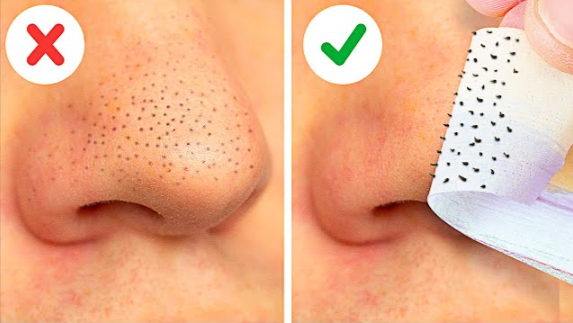
10. Avoid pore strips and other home extraction methods
You’ve already learned that picking, scratching, and popping any form of acne is considered off-limits. Still, it can be tempting to locate some form of extraction to get rid of those pesky blackheads.
In recent years, there’s been an uptick in masks, pore strips, and extraction tools that promise clean pores.
Although pore strips and masks may help remove junk from your pores, they can also remove elements that actually help your skin. This includes natural oils and hair follicles. Removing all of these elements can cause your skin to dry out and become irritated.
When irritation occurs, your sebaceous glands may go into survival mode and produce even more oil — resulting in more blackheads.
Other extraction methods include professional-grade metal or plastic tools. These purportedly work by removing clogged blackheads without scratching your skin. The keyword here though, is professional.
Dermatologists who have years of training sometimes use these tools. When placed into hands with limited experience, extraction tools can turn into a source for scratches, wounds, and even scars.
11. Don’t waste your time on benzoyl peroxide
When it comes to over-the-counter (OTC) acne spot treatments, you’re likely to find that many products contain benzoyl peroxide. The problem is, benzoyl peroxide doesn’t work for all types of acne.
Benzoyl peroxide works by reducing swelling, which a key marker of inflammatory acne, which includes cysts and pustules. It can also get rid of underlying bacteria in a pimple.
However, blackheads aren’t considered inflammatory. Also, they are not caused by bacteria, so products featuring benzoyl peroxide won’t do much good.
12. See your dermatologist for professional extraction
Any new acne regimen, including one for blackheads, can take anywhere from 6 to 12 weeks to take effect.
If you continue to see new and preexisting blackheads after this time, you may need to make an appointment with your dermatologist. They can use professional tools to extract blackheads. The Healthline FindCare tool can provide options in your area if you don’t already have a dermatologist.
They may even recommend a series of dermabrasion treatments or prescription retinoids to prevent blackheads from coming back.
5 Types of Acne Scars and How to Treat Them
Acne affects just about everyone at some point in their lives, sometimes at the most inconvenient times, like before dates, parties, or work presentations.
Acneoften appears when hair follicles, or pores, on your skin get clogged by oil and dead skin cells, forming comedones. Then bacteria can start to grow, causing inflammation and red bumps.
Types of acne
Acne can be mild, moderate, or severe. In severe cases, acne can cause painful, pus-filled bumps, called nodules or cysts, beneath the skin’s surface.
Moderate acne tends to cause red bumps and pus-filled pimples. Mild acne causes less irritated whiteheads or blackheads with or without a few red bumps or pustules.
Most of the time, the light red or brown marks left behind by healed acne clear up over time on their own. But severe acne, especially cystic acne, is likely to leave permanent scarring as it heals.
Permanent scarring is more likely to develop if you pick at or squeeze your acne instead of treating it or allowing it to heal.
Some people don’t experience acne scars. But most people deal with at least a few acne scars at some point in their lives. The type of acne scarring you can expect depends on the type of acne you develop and how you treat it.
Atrophic scars
Atrophic scars are flat, shallow depressions that heal below the top layer of skin. These scars are commonly caused by severe cystic acne. However, other types of acne can cause them as well.
The appearance of atrophic acne scars can vary depending on a person’s history with acne. There are three types of atrophic scars:
Boxcar scars
Boxcar scars are broad, usually box-like depressions with sharply defined edges. Boxcar scars are caused by widespread acne, chickenpox, or varicella, a virus causing a red, itchy rash with blisters.
Boxcar scars most often form on areas like the lower cheeks and jaw, where skin is relatively thick.
Ice pick scars
Ice pick scars are smaller, more narrow indentations that point down into the skin’s surface. These scars are common on the cheeks.
Ice pick scars tend to be very tough to treat, and often require persistent, aggressive treatment.
Rolling scars
Rolling scars have a varying depth, with sloping edges that make skin appear wavy and uneven.
Hypertrophic and keloid scars
Unlike atrophic scars, hypertrophic and keloid scars form as raised lumps of scar tissue where the acne once was. This happens when scar tissue builds up, sometimes from previous acne spots.
Hypertrophic scars are the same size as the acne that caused them. Keloid scars create a scar larger than the acne that caused them and grow beyond the sides of the original spot.
Hypertrophic and keloid scars are more common on areas such as the jawline, chest, back, and shoulders. People with a darker skin color are more likely to develop this type of scarring.
Post-inflammatory hyperpigmentation
Once your acne heals, it often leaves behind a darker or discolored patch of skin. This is not a scar, and will resolve on its own with a good sun protection regimen.
Hyperpigmentation can occur when skin is damaged by severe acne, or if you’ve picked at your acne. But again, in all cases, your skin will return to its natural color over time with proper sun protection.
People most likely to experience post-inflammatory hyperpigmention include those who have darker skin and those who pick or squeeze their acne.
Treatment for atrophic scars
Treatment for atrophic scars, including boxcar, ice pick, and rolling scars, involves two stages. The first stage focuses on reducing the depth of the scar to even out the skin’s surface.
Stage 1
Stage 1 treatments for atrophic scars can be done at your dermatologist’s office using one or more of the following treatments:
- Chemical peels: Glycolic or salicylic acid is used to remove the outer layers of skin. This treatment should not be used for very deep scarring.
- Dermabrasion: A tool to “sand down” the top layers of skin is used, which can make a boxcar scar more shallow. This treatment usually requires multiple visits to your dermatologist.
- Dermal fillers: This involves injecting a substance, such as hyaluronic acid or calcium hydroxylapatite, to improve the appearance.
- Laser therapy: High-energy light removes the outer layers of skin and stimulates collagen production in inner layers of skin. This is called ablative laser therapy. Nonablative therapy uses heat to spark production of collagen in the inner layers of skin.
- Microneedling: Creating tiny injuries with needles across the scar helps to form pockets of healing with collagen production. This collagen can reduce a scar’s depth.
- Punch excision: This involves cutting a scar out of your skin, then pulling the skin together and stitching it up.
- Punch grafting: This involves removing the scar from your skin, then replacing it with skin taken from another part of the body.
- Subcision: Breaking up scar tissue raises up the scar instead of it being pulled down.
- TCA Cross (chemical reconstruction of skin scars): Applying trichloroacetic acid (TCA) onto a scar helps form extra collagen that may raise up the scar.
Stage 2
The next step in treating atrophic scars is to reduce any discoloration. Your dermatologist is likely to follow up with more:
- chemical peels
- laser therapy
- lifestyle recommendations like sun protection
Home treatment
You can also treat atrophic acne scars at home with topical over-the-counter (OTC) retinoids, such as Differin. OTC Retinoids may promote collagen formation and even out pigment.
While you may be tempted to use an at-home chemical peel, dermatologists do not recommend this because it has the potential to cause more damage than help. It’s best to talk with your dermatologist about safe ways to treat acne scars at home.
Treatment for hypertrophic and keloid scars
Treatment for hypertrophic and keloid scars focuses on reducing the height of the scar so the skin appears smoother.
Dermatologist treatments
Your dermatologist can perform one or more treatments to start reducing the appearance of your hypertrophic and keloid scars. This can include:
- Steroid injections: Steroids are injected directly into a scar to soften the scar tissue, which can reduce its height. Usually you’ll need several steroid injections spaced several weeks apart.
- Surgical removal
- Laser therapy: This may include both ablative and nonablative laser therapy.
Home treatments
To treat hypertrophic and keloid scars at home, you can try several options:
- Bio-Oil: This is a topical oil that may help reduce the appearance of raised scars, according to limited. It’s available for purchase at your local pharmacy or online.
- Massage: This can weaken scar tissue and reduce the height of your scar.
- Silicone sheeting: These are gel silicone sheets that you can place on top of your raised scars to help soften them, reducing their height. One option is ScarAway.
Treatment for post-inflammatory hyperpigmentation
You can reduce the appearance of post-inflammatory hyperpigmentation at your dermatologist’s office or at home. The goal is to prevent further darkening and allow your skin to naturally recover over time.
Dermatologist treatments
- chemical peels
- laser therapy
- hydroquinone
- prescription topical retinols and retinoids, which can increase your skin’s production of collagen and even out complex as well as lighten dark spots. A prescription-strength formula retinoid will work more quickly and efficiently than one you can get over the counter.
Home treatments
- Use a broad spectrum sunscreen with an SPF of at least 30 daily at regular intervals. Physical sunscreen blockers, such as zinc oxide and titanium dioxide with iron oxide, provide better protection.
- You can try an OTC retinoid like Differin, but it may work more slowly than a stronger prescription.
When to see a dermatologist
For most people with acne, discoloration will fade with proper acne treatment and sun protection. However, if you have scarring or discoloration that lasts more than a year and you’re interested in treatment, speak with your dermatologist.
Your dermatologist can help develop a treatment plan best suited to your skin. Home treatments can also help reduce the appearance of acne scars, but are usually not as effective as treatments offered by your dermatologist.
The bottom line
Everyone experiences acne from time to time, and sometimes acne causes scarring as it heals. Acne scars vary in appearance depending on the type and severity of the acne.
There are many treatments available for acne scars of all types. If you’re concerned about acne scars, see your dermatologist to develop a treatment plan that’s right for you.